Diraq, SQC tapped for DARPA quantum drive
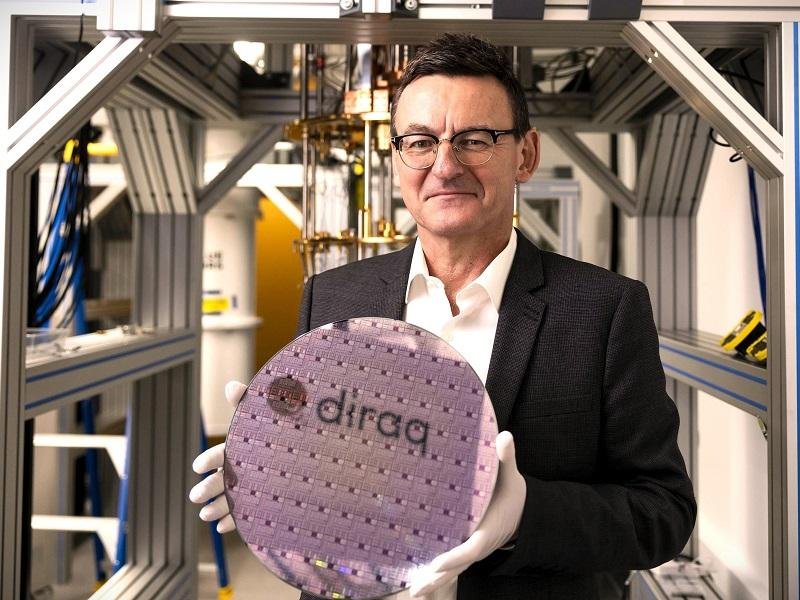
Image: Diraq founder and chief executive Andrew Dzurak.
Two local quantum computing startups have secured contracts with US defence research agency DARPA for a coveted benchmarking program designed to find the companies capable of achieving utility-scale within the next decade.
Diraq and Silicon Quantum Computing will take part in the first stage of the Quantum Benchmarking Initiative (QBI) over the next six months, joining 16 other firms from the United States, United Kingdom, Canada and France.
The program will assess the different quantum computing approaches of each company, building on work to date through the Underexplored Systems for Utility-Scale Quantum Computing (US2QC) Program, which is in the final stage.
With claims abound, DARPA’s ultimate goal is determining whether it is possible to build a commercially useful quantum computer “much faster than conventional predictions” and, ideally, before 2033.
Among the quantum computing approaches being tested are supercomputing qubits, trapped ion qubits, natural atom qubits, photonic qubits and semiconductor spin qubits, as well as other novel approaches.
Diraq founder and chief executive Andrew Dzurak said the company, which plans to deliver a fault tolerant quantum computer by 2028 using silicon quantum dots, was pleased to be one of the companies selected and is “confident“ in its approach.
“We are pleased to be selected by DARPA and the US government for this focus on full-scale, fault-tolerant quantum computing and welcome the opportunity to demonstrate our CMOS quantum dot qubit approach,” Professor Dzurak said.
Diraq will work with a consortium of quantum startups, including Emergence Quantum, a new Australian company set up by former Microsoft quantum researchers David Reilly and Thomas Ohki, and Riverlane.
SQC founder and CEO Michelle Simmons said the US government contract “validates” the Sydney company’s approach as the race quantum computing race heats up. She said the company is “extremely excited” to be working with DARPA.
“Not only is the associated funding incredibly useful, DARPA’s third-party interrogation of our path to a utility-scale quantum computer will be immensely valuable,” Professor Simmons said in a statement.
Other News