QuantX Labs and Adelaide University optimise precision timekeeping technologies for resilient Defence operations

Building on more than four years of collaboration between QuantX and academics at the Institute for Photonics and Advanced Sensing (IPAS) at Adelaide University, the completed project has accelerated the transfer of world-leading research in precision timing from the laboratory to industry, supporting Australia’s sovereign capability in advanced quantum technologies. The project has enabled new optical clock technologies to be evaluated, matured and positioned for commercialisation.
Optical atomic clocks for sovereign communications and navigation
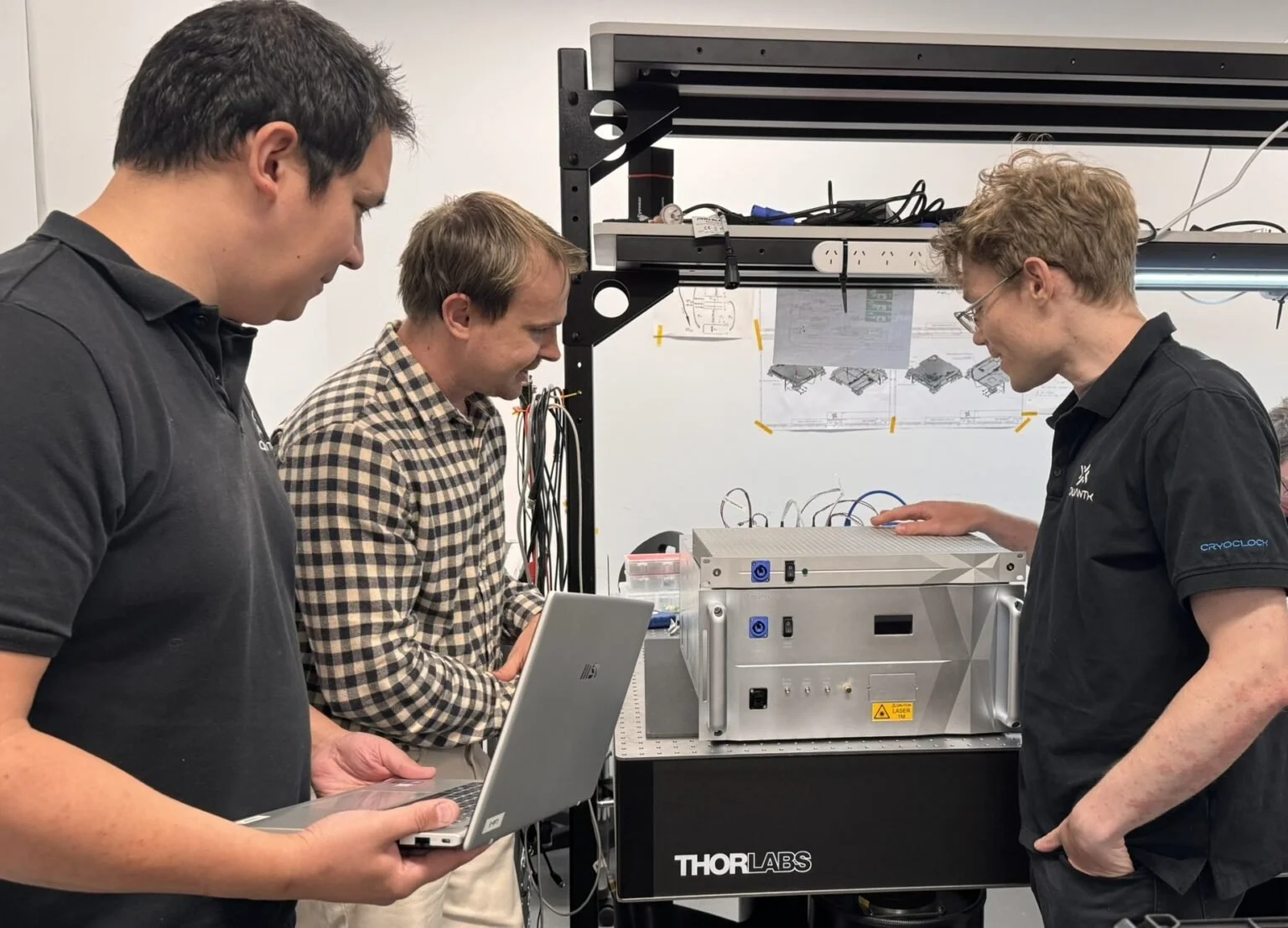
Defence and civilian critical infrastructure, including telecommunications, energy networks and financial systems, depend on precise and stable timing to operate safely and effectively. QuantX was established to help address the growing need for resilient timing and synchronisation solutions in environments where global navigation satellite systems (GNSS), such as GPS, are degraded, denied or spoofed. QuantX is working with its partners to evaluate resilient, alternate timing networks in the development of TEMPO, its next-generation optical atomic clock.
A key outcome of the project was the development and demonstration of new optical clock techniques that significantly advance the state of the art. Researchers investigated alternative optical clock architectures and enabling technologies with the potential to deliver order-of-magnitude improvements in stability, a critical step toward next-generation timing systems.
Dr Sebastian Ng, Head of Positioning, Navigation, and Timing at QuantX, said: “Through this collaboration, QuantX has been able to directly integrate cutting-edge university research into our technology roadmap. The project has reduced technical risk, informed key design decisions and strengthened our ability to commercialise next-generation optical clocks for both terrestrial and space applications.”
This work directly supports QuantX’ development of advanced quantum clocks, including future enhancements to its TEMPO clock platform. The project ensured that emerging optical clock technologies were assessed for performance, robustness and suitability for real-world deployment, bridging the gap between fundamental research and operational systems.
Building workforce capabilities with student opportunities
The project also delivered strong workforce and capability outcomes, including the successful contribution of Adelaide University PhD researcher Lachlan Pointon, whose work on novel optical clock techniques has expanded Australia’s expertise in precision timing.
“Development of the next version of portable optical atomic clock is vital to Australia’s defence industry and critical infrastructure,” said Mr Pointon. “With QuantX Labs as an industry partner, I have gained valuable insights into the challenges and work undertaken in the private sector. It’s made me a better researcher.”
These outcomes reinforce the role of industry-embedded research training in developing highly skilled graduates who can contribute immediately to advanced technology sectors.
A foundation for future quantum technologies
This project demonstrates the value of a well-established translation pathway that connects Australia’s world-class research base with industry capability and market need. By aligning academic innovation with defence requirements and commercial delivery, this model provides a scalable foundation for future quantum technologies to be developed, manufactured and deployed from Australia – for Defence and broader national benefit.
“Defence Trailblazer is proud of the impact achieved by QuantX and its academic partners over the course of this collaborative project,” said Dr Margaret Law, General Manager – Technology Development & Acceleration. “It exemplifies how Australian ventures and university spin-outs are emerging as world leaders in quantum technology.”
Other News