The quantum leap we can’t afford to miss is sitting in our unis
Quantum technology is a once-in-a-century scientific leap, comparable to the advent of the Internet.
Right now, Australia is delivering disproportionate impact: our universities are home to some of the world’s most advanced quantum research and talent. But without urgent and strategic investment, we risk squandering our lead and buying the future from others.
Quantum computing, sensing and communications have the potential to radically accelerate how we solve complex problems. They harness quantum states to perform operations on many potential solutions in parallel, with applications that range from drug discovery and material science to clean energy, logistics and even finance. These breakthroughs won’t just drive productivity; they will underpin sovereign capability and shape our way of life.
Like artificial intelligence, quantum technology has the power to redefine what is possible. But unlike AI, quantum comes with longer timelines, higher uncertainty and far greater costs. It doesn’t follow a typical research and development cycle. It demands patient capital, deep technical expertise and long-term commitment.
This shouldn’t paralyse us but rather should motivate us. The countries that act now with bold, coordinated investment will shape the future of global innovation, defence, healthcare, cybersecurity and so much more.
Australia has a clear advantage in quantum science and it’s important that we capitalise on the opportunity. This was highlighted by the federal government in 2023 when they developed the National Quantum Strategy. Our researchers, including those at UNSW Sydney, are responsible for world-first breakthroughs that have already been translated into commercial outcomes through homegrown startups like Silicon Quantum Computing (SQC) and Diraq.
Both companies are pursuing silicon-based approaches to quantum. Unlike some global competitors that rely on bulkier or less scalable methods, SQC and Diraq are developing technologies that work with the same silicon chip architecture found in today’s laptops and phones. This makes their approach more compact, more efficient to manufacture and more scalable through existing semiconductor foundries.
SQC, founded by Professor Michelle Simmons, aims to build the world’s first error-corrected quantum computer in silicon by 2033. The company has already achieved a series of milestones, including the first silicon atomic-scale quantum bit. Its atomically precise engineering enables ultra-stable and highly accurate quantum operations.
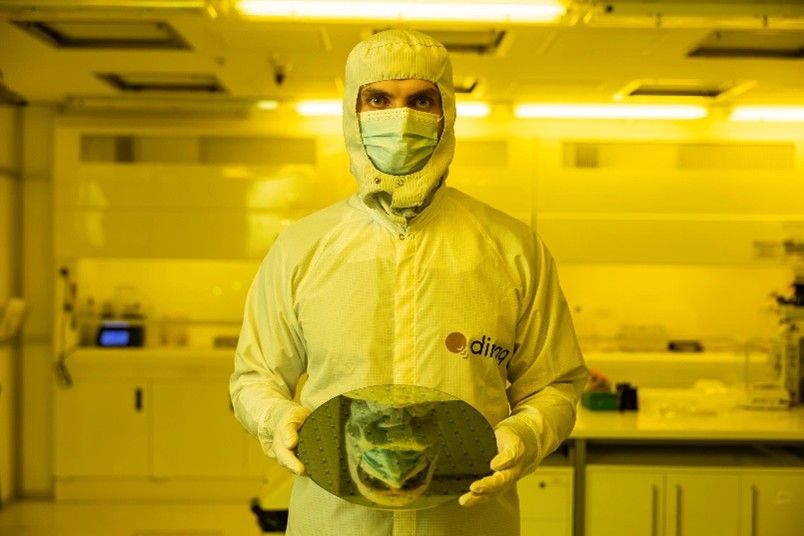
Diraq, led by UNSW’s Professor Andrew Dzurak, has set a goal to develop a one-million-qubit chip within the next six years. Its commercial model is based on using standard silicon transistors as quantum bits, allowing quantum processors to be produced in the same foundries that make today’s computer chips. That scalability is crucial to unlocking commercially valuable use cases in areas such as pharmaceuticals, defence, financial modelling and climate forecasting.
Both SQC and Diraq reflect the strength of Australia’s deep tech ecosystem. They leverage over 20 years of foundational research that has resulted in an excess of 150 patents between them. Their progress shows what is possible when long-term R&D is supported with serious commercial intent.
But this momentum is both real and fragile; without continued investment and coordination, we risk losing the lead.
Other News