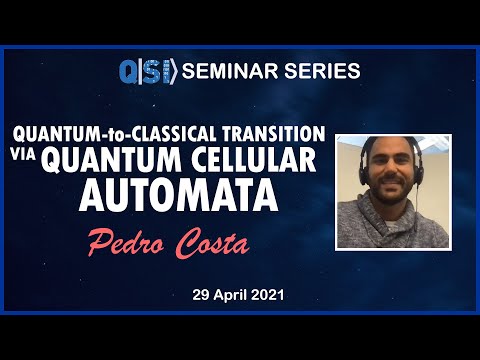
QSI Seminar: Pedro Costa, Macquarie University, Sydney
Quantum cellular automaton, an abstract model used to validate the quantum-to-classical transition
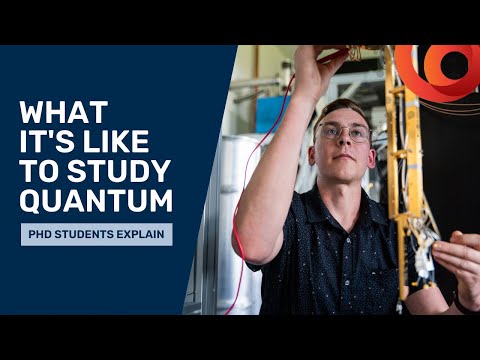
Discover what it's like to study a PhD in quantum technology | SQA PhD Scholarships
SQA scholars share their experiences of our PhD program
What inspires a PhD student to study quantum technology | Macquarie University's Elisabeth Wagner
Macquarie University PhD student Elisabeth Wagner explains what inspires her studies in quantum technology

Why I study quantum technology | Wyatt Vine, UNSW PhD Student
UNSW PhD Student Wyatt Vine explains why he's studying quantum technology
What it's like to study quantum mechanics | University of Sydney PhD student Juliette Soule explains
University of Sydney PhD student Juliette Soule explains what it's like to study quantum mechanics
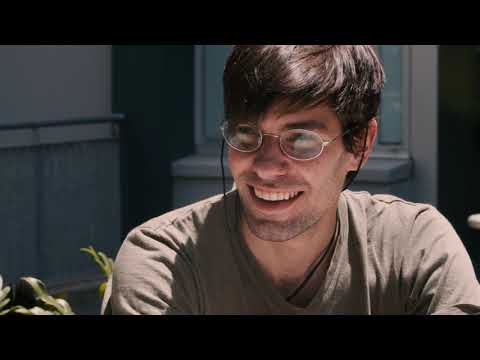
Why did I choose to study quantum technology? UTS PhD student Fabio Henriques explains
Are we at the beginning of a quantum revolution? UTS PhD student Fabio Henriques explains what interests him in the field of quantum
From automation to algorithms
This webinar introduces Q-CTRL's new tools to build autonomy in the operation of quantum computing hardware, and how the improved error rates we achieve impact on algorithmic success
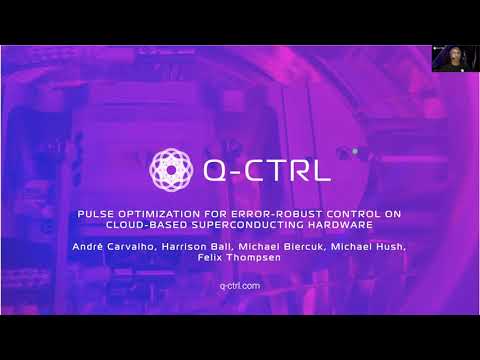
[APS March Meeting] Pulse optimization for error-robust control on cloud-based hardware.
In this APS March Meeting 2021 video we describe an experimental effort designing and deploying error-robust single-qubit operations on IBM Quantum hardware
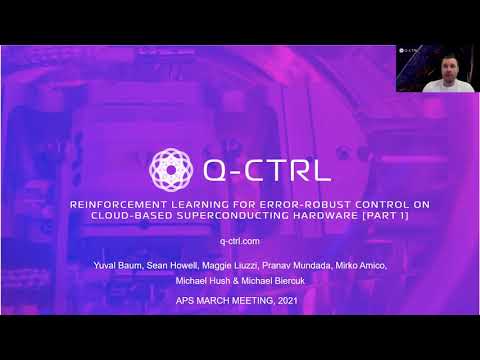
[APS March Meeting] Reinforcement learning for error-robust control on cloud-based hardware [I].
The noisy nature of today's quantum hardware limits the ability to realize functioning quantum computers
[APS March Meeting] Reinforcement learning for error-robust control on cloud-based hardware [II].
The noisy nature of today's quantum hardware limits the ability to realize functioning quantum computers