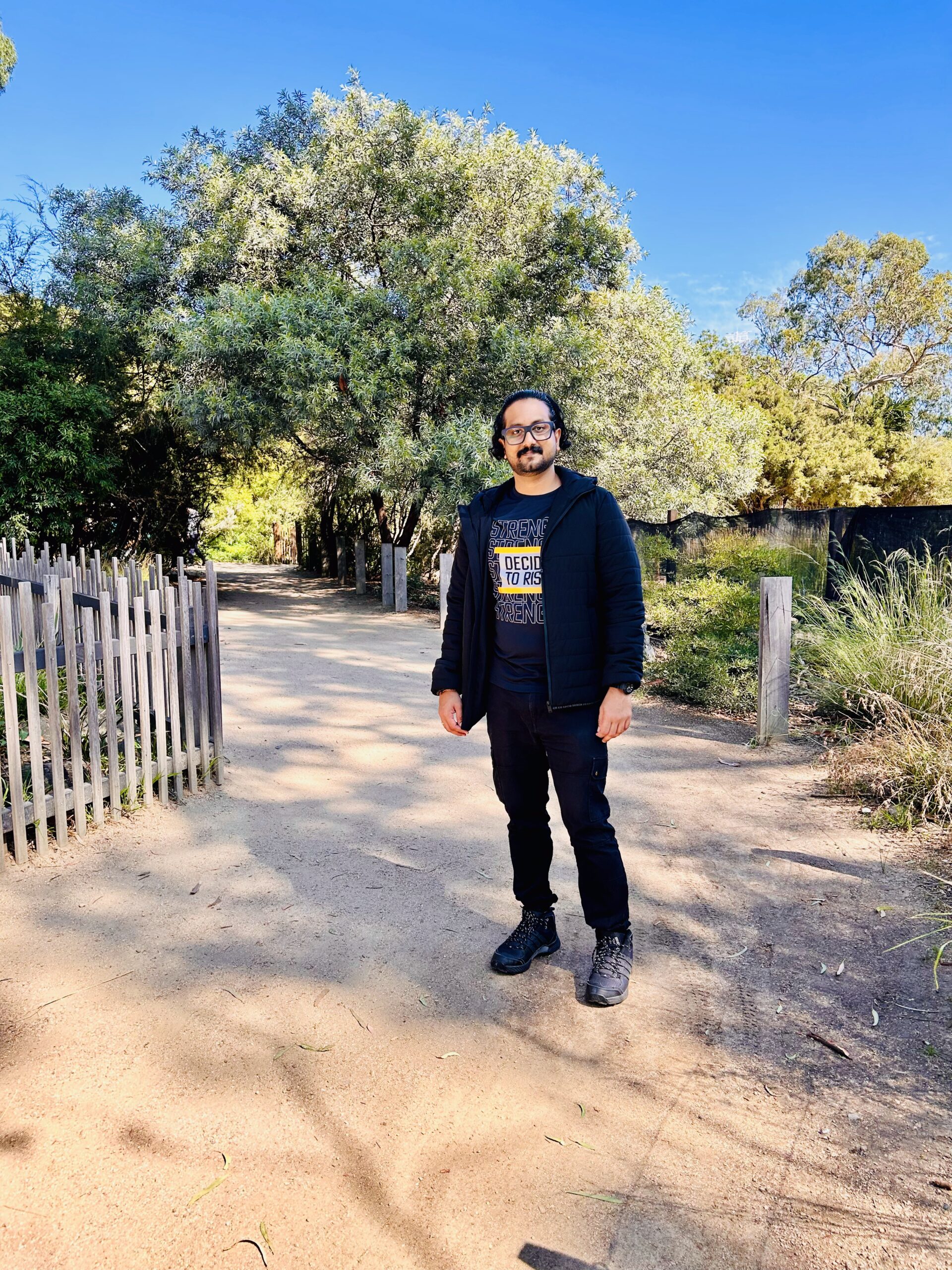
KIRAN SREEDHAR RAM
I am currently pursuing my second Ph.D. in Distributed Quantum Computing at Deakin University, Australia, with a research focus on scalable fault-tolerant quantum systems, distributed quantum architectures, quantum error correction, and noise and decoherence modelling for quantum computing. My research aims to contribute toward the development of physics-aware distributed quantum systems capable of supporting the future of large-scale fault-tolerant quantum computing. My academic journey began with a Bachelor of Technology in Electronics and Communication Engineering from University of Kerala, India. I further pursued a Master of Engineering in Electrical and Electronics Engineering, followed by a Ph.D. in Organic Photovoltaics at Charles Darwin University, Australia. These experiences provided me with a multidisciplinary background spanning electronics, renewable energy systems, robotics, autonomous systems, artificial intelligence, and advanced computing technologies. At CDU, I have taught and supported several engineering units including Heat and Mass Transfer, Project Management, Risk and Reliability, Computer Aided Design, and Materials Science. I am passionate about creating an engaging, supportive, and inclusive learning environment that helps students confidently develop both technical knowledge and practical skills in both face-to-face and online settings. Beyond teaching and research, I have actively contributed to several scientific, leadership, and outreach initiatives. As part of the NASA Pluto Occultation Mission’s Hubble optics team led by Dr. Eliot Young, I gained experience in telescope setup, observational support, and data analysis using PyMovie. This opportunity strengthened my practical scientific and analytical capabilities while exposing me to large-scale collaborative research projects. In addition, as the Inspire NT Robotics Team Leader, I coordinated robotics workshops and led CDU student representatives in delivering STEM outreach activities to school students. Through hands-on robotics and Arduino programming sessions, I helped foster university–school engagement and encouraged young students to explore science, technology, engineering, and mathematics (STEM) pathways. I strongly believe in the transformative potential of research, innovation, and emerging technologies to solve real-world problems and advance scientific understanding. My long-term goal is to contribute meaningfully to research and development in quantum computing.